ServicesTile Roofing
Tile Roofing in Paradise Valley
Tile can outlast decades, but the underlayment beneath it is what keeps water out, and that layer wears out first. We lift, replace and relay tile roofs to code, pull the permit and walk you through each inspection.
What tile roofing work really involves
Most tile roofs here are concrete or clay, and the tiles themselves rarely fail. What fails is the underlayment, the felt or synthetic sheet that sheds water under them. Years of summer heat dry it out until it cracks, and that is usually when leaks start showing on the ceiling.
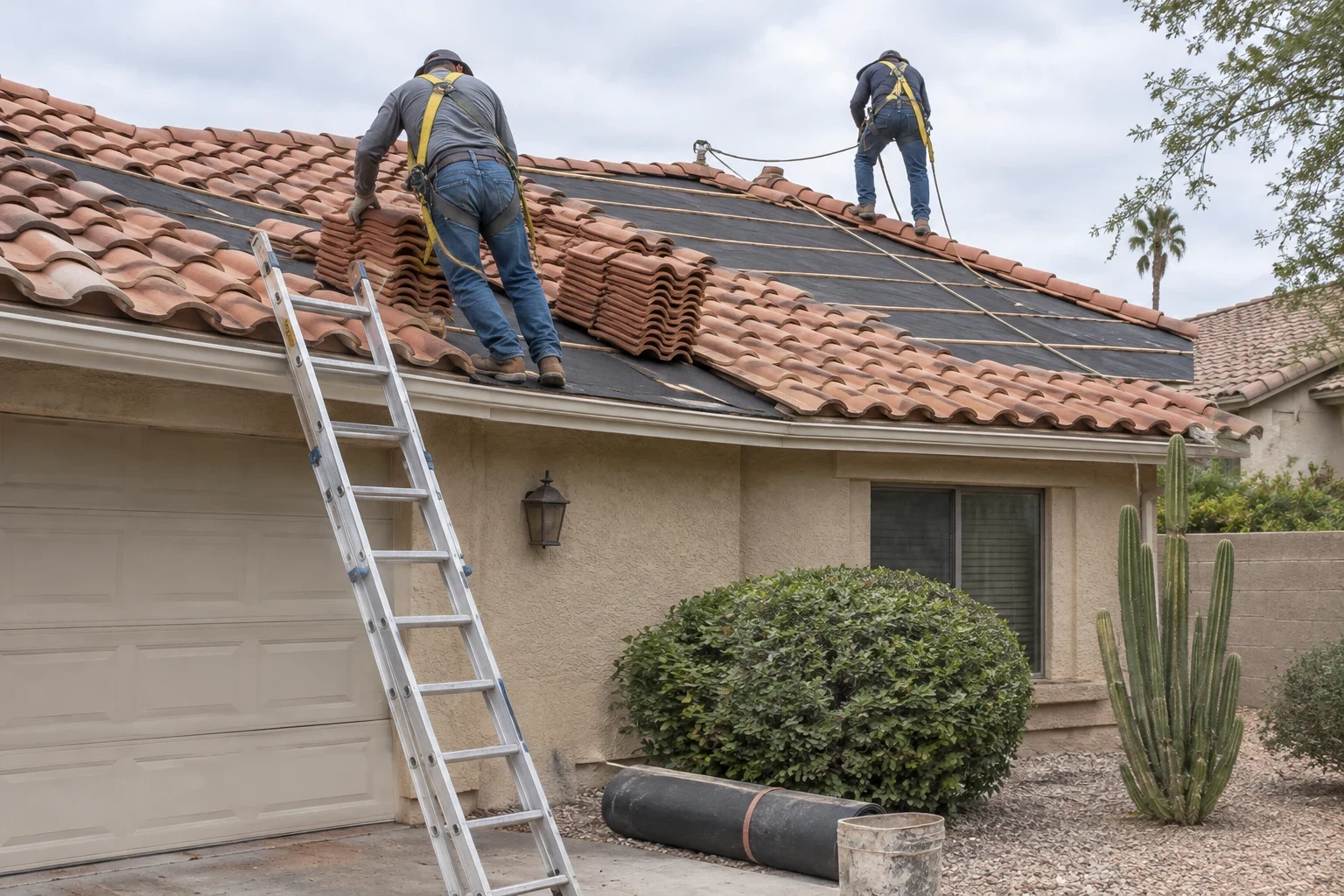
Often the fix is a lift and relay. We take the tiles off, stack them on the roof, replace the underlayment and flashings, then set the good tiles back with new fasteners. When tiles are too brittle or a profile is no longer made, we talk with you about new tile instead.
Tile is regulated closely by the building code: minimum slope, underlayment layers, how each tile is fastened. As an Arizona KB-2 licensed contractor, we handle the paperwork with the building department and build to those rules so the work passes inspection the first time.
What's included in our tile work
- Careful tile removal and staging
- We pull tiles by hand and stack them evenly across the roof so the weight stays spread out. Cracked pieces are set aside and counted so you know the replacement number up front.
- New underlayment to code
- We install underlayment rated for tile and lay it the way the code calls for on your roof's slope. On lower-pitch sections, that can mean an extra layer or a self-adhered membrane.
- Flashings, valleys and penetrations
- Valley metal, wall flashing, and pipe and vent flashings are replaced, not reused. These are the spots where tile roofs leak most, so we treat them as part of the job, not an extra.
- Battens, bird stops and fasteners
- Where battens are used, we set new ones. Eave closures keep birds and debris out, and each tile is fastened to the pattern the code requires for its profile.
- Inspections and cleanup
- We file the permit, schedule the inspections and meet the inspector on site. When the roof is finished, we clear broken tile, old underlayment and nails from your yard and driveway.
Signs your tile roof needs attention
Water stains after a rain
A stain on the ceiling under a tile roof usually means the underlayment has given out, even if every tile looks fine from the ground.
Cracked or slipped tiles
Broken or shifted tiles expose the underlayment to sun, which speeds up its breakdown. A few loose pieces are worth fixing before they turn into a bigger job.
Your roof is 20 or more years old
Older felt underlayment in desert heat often becomes brittle around this age. If you have never had the underlayment replaced, it is likely due for a look.
Rusted or lifting flashing
Valley metal and wall flashing that has rusted through or pulled away lets water run straight under the tile.
Debris piling in valleys
Leaves and dirt that sit in valleys hold water against the roof and can push it sideways under the tiles.
How a tile roof job runs
- 1
A look at your roof
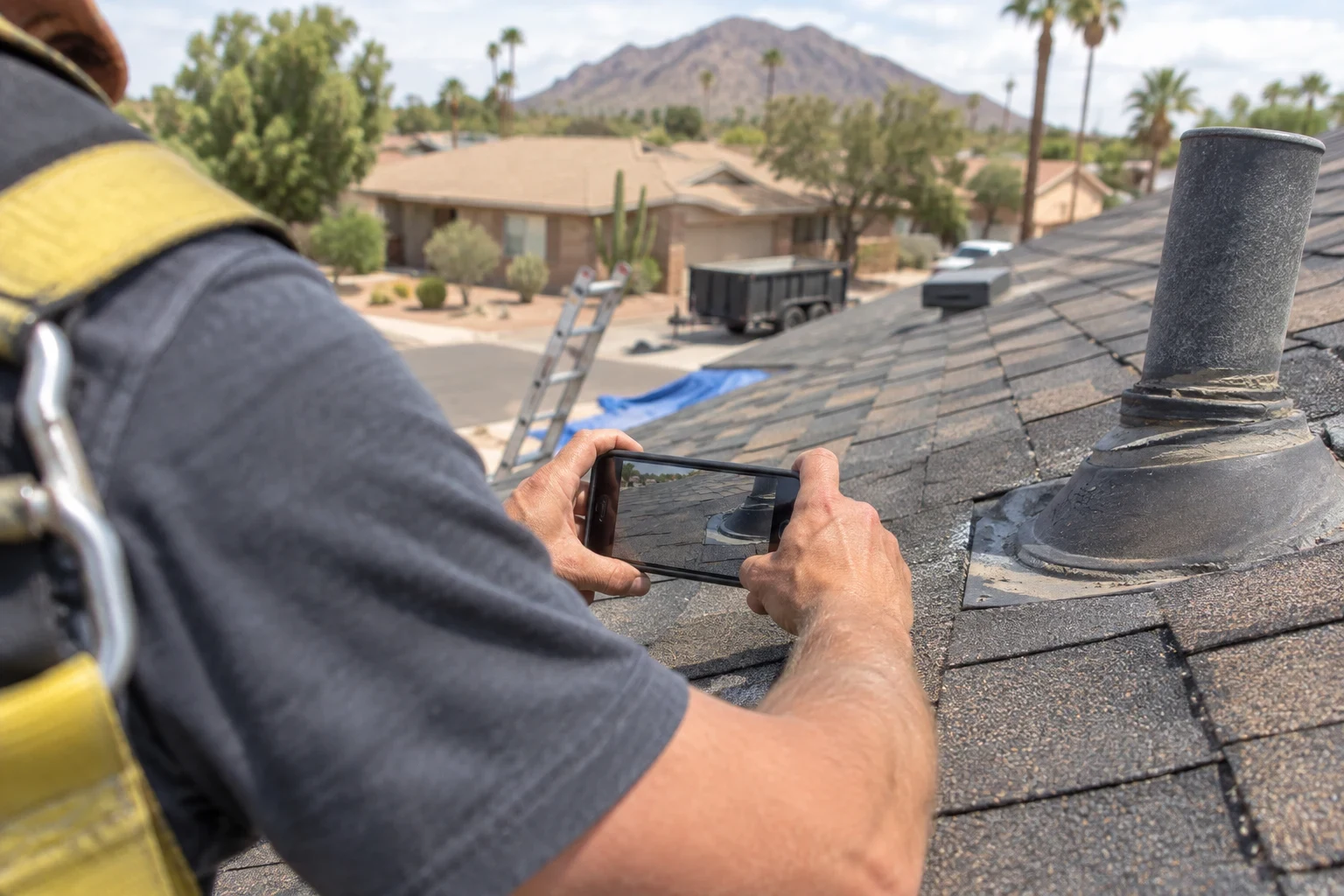
We come out, check the tiles, the flashings and what we can see of the underlayment, and take photos so you see what we see. You get a written estimate that spells out each line.
- 2
Paperwork filed with the town
Once you say yes, we file the permit with the local building department. Work starts after it is issued, not before.
- 3
Tear-off and underlayment
We remove tiles, strip the old underlayment and check the decking. Soft or damaged boards are shown to you before they are replaced, then new underlayment and flashings go down.
- 4
Mid-roof inspection
Many jurisdictions want to see the underlayment before tile goes back on. We schedule that inspection and wait for the sign-off so nothing gets covered up early.
- 5
Relay, final and cleanup
Tiles are set and fastened, the final inspection is passed, and we clean up. Our 10-year labor warranty covers the workmanship on the finished roof.
What moves the cost of tile roofing
No two tile roofs price the same. Instead of a single figure with nothing behind it, your written estimate breaks the job into its parts so you can see where each dollar goes. These are the things that move it most.
- Relay or new tile
- Reusing your existing tile keeps material costs down. New tile adds cost, especially when a full roof's worth is needed.
- Broken tile count and matching
- Replacement tiles for older or discontinued profiles can be hard to find. We may suggest pulling matching tiles from a less visible slope to keep the front of your home consistent.
- Roof size, pitch and shape
- More area means more labor and material. Steep slopes, hips, valleys and dormers take longer to work around safely.
- Decking condition
- We cannot see every board until the old underlayment comes off. If decking needs replacing, we show you and confirm the cost before going further.
- Underlayment choice
- Synthetic and self-adhered underlayments cost more than standard felt but tend to hold up better in heat. We explain the tradeoff and what code requires for your slope.
Tile roofing questions we hear often
Something not covered here? (480) 485-3889
Can my existing tiles be reused?
Usually, yes. Concrete and clay tiles in good shape can go right back on after the underlayment is replaced. We expect some breakage during removal on older roofs and will tell you the count before ordering replacements.
Do I really need a permit just to replace underlayment?
In most cases, yes, because replacing underlayment counts as reroofing under the building code. We handle the application and the inspections ourselves. A job the inspector has signed off also gives you a clean record if you sell your home later.
How long will the work take?
An average single-story tile relay typically takes several working days, plus time waiting on the inspection between underlayment and tile. Larger or more complex roofs take longer. We give you a realistic schedule before we start.
Could my shingle roof be switched over to tile?
It depends on how your home is built. Tile weighs several times what asphalt shingles do, so the framing must be able to carry it, and the slope has to meet the minimum for tile. If the switch doesn't make sense, we will tell you plainly and go over shingle roofing or other choices.
What warranty comes with the work?
We back our tile roofing with a 10-year labor warranty on the workmanship. Tile and underlayment carry their own manufacturer coverage, which we explain when we go over your estimate.
Let's get your tile roof right
Tell us what you're seeing on your roof and we'll set a time to come look. You'll get a written estimate and a plain explanation of the permit and inspection steps.