ServicesFlat Roofing
Flat Roofing in Paradise Valley
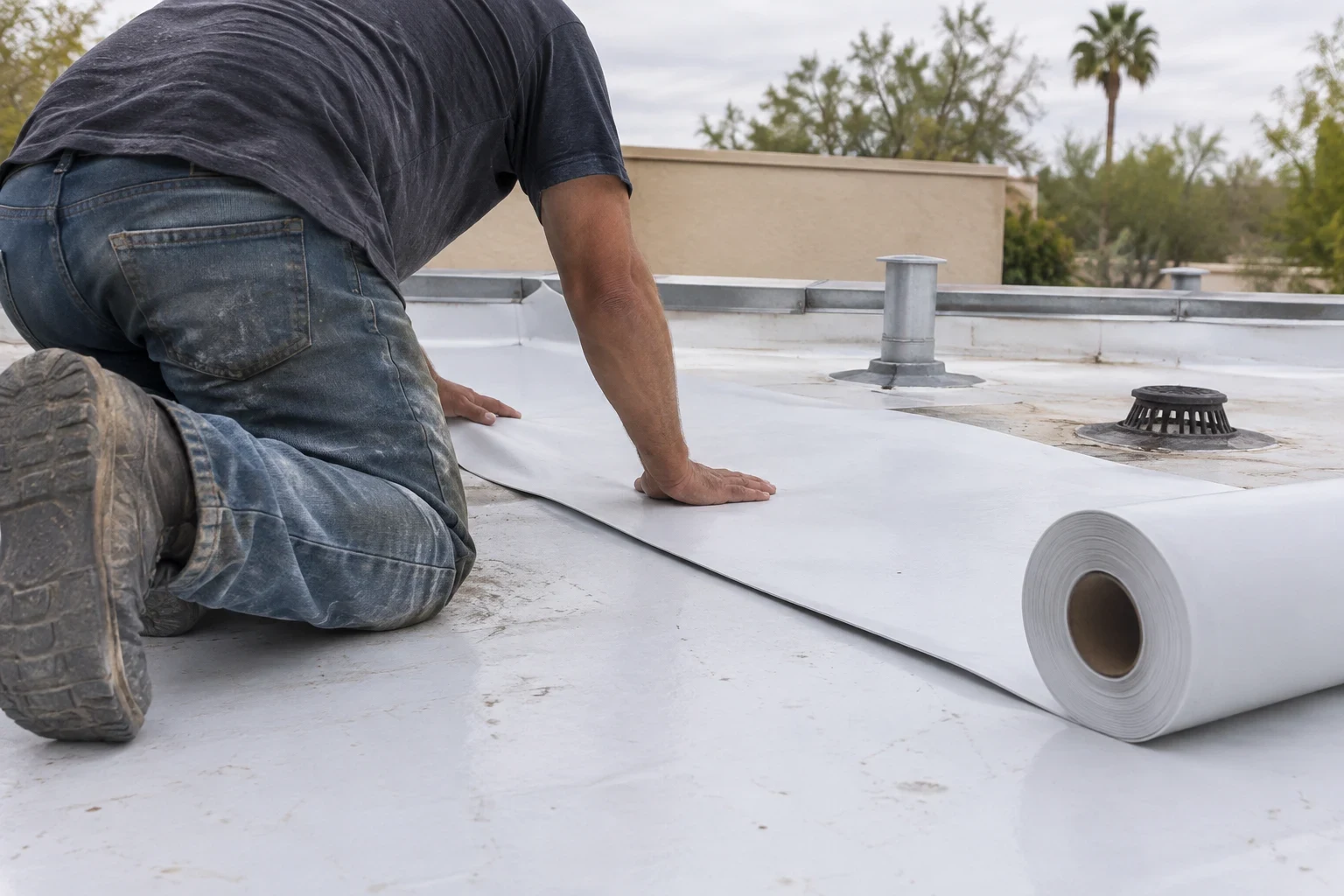
We install and rebuild low-slope roofs on homes with parapet walls, scuppers and rooftop AC units. Every job includes a permit, a fix for areas where water sits, and a membrane made for hard sun, so your home stays dry and the work holds up when the inspector checks it.
What flat roofing covers, and when it fits
Most flat roofs aren't truly flat. They're built with a slight fall that carries water to scuppers or drains, and the membrane on top is what keeps your home dry. When that fall is off, or the membrane has baked through too many summers, water sits and works its way into the seams.
We work with modified bitumen, TPO single-ply and built-up systems, and we'll tell you which one suits your roof and why. If spray foam makes more sense for your home, we'll say so and explain our foam roofing option instead.
As an Arizona KB-2 licensed contractor, we pull the permit and build to the code that applies, including minimum slope, how many old layers can stay, and how the membrane ties into parapet walls. You hear the plan in plain words before anything comes off the roof.
What the work includes
Code check and inspection
We file the reroof paperwork with the town before tear-off and build to what the inspector will look for. When an inspection is required, we schedule it and are on site for it.
Tear-off down to the deck
Code limits how many layers a roof can carry, and it doesn't allow covering a wet one. When the old roof is soaked or already doubled up, we remove it and replace any soft decking we find. You get photos of what was underneath.
Tapered insulation for drainage
Where water ponds, we add tapered insulation or small crickets to restore at least a quarter inch of fall per foot, the slope most membranes are designed around.
Parapets, scuppers and curbs
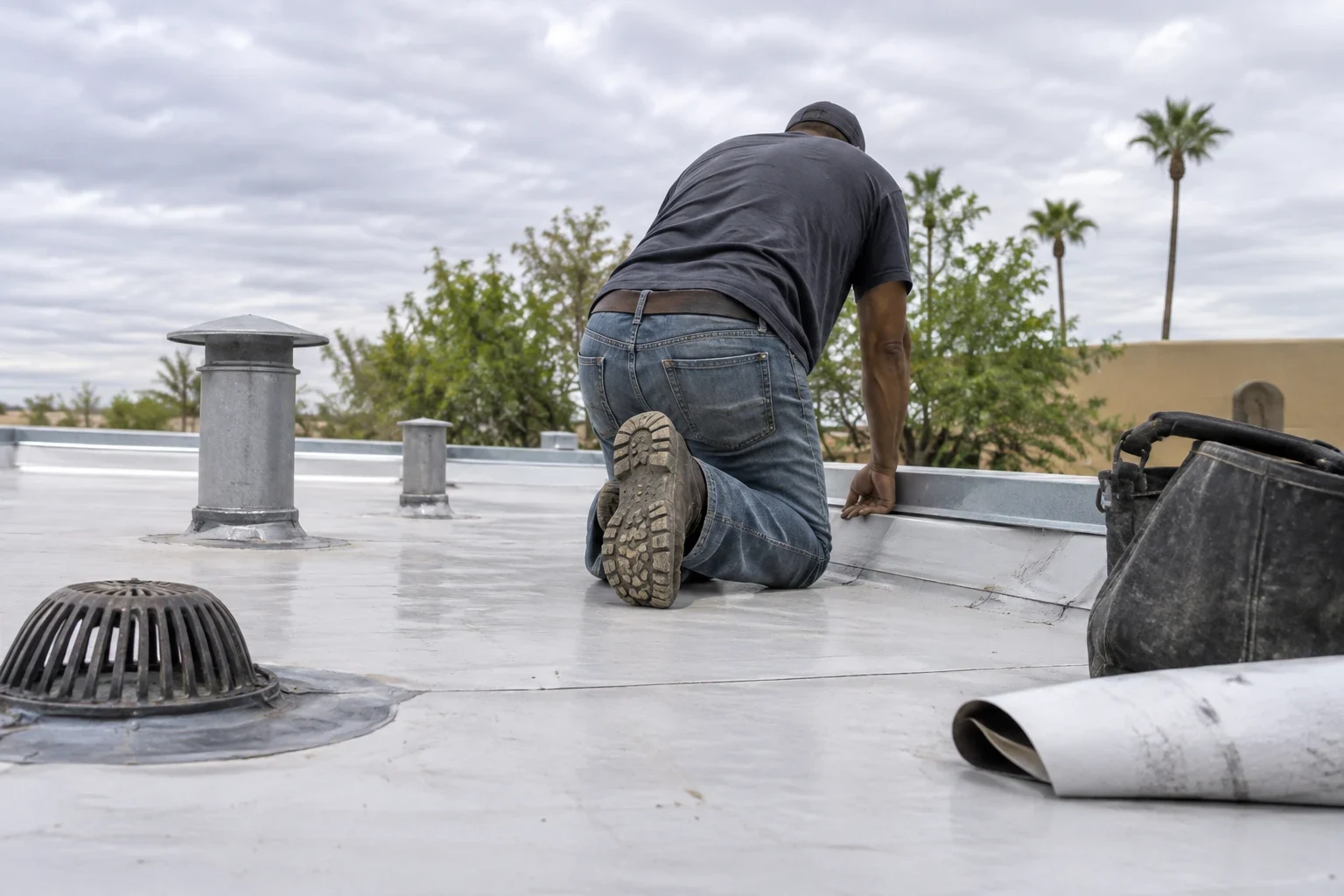
Flat roof leaks usually start at the edges and around anything that pokes through. We flash parapet walls, reseal scupper openings, and wrap AC curbs and vent pipes so they shed water instead of collecting it.
Reflective finish and cleanup
We finish with a light-colored surface that stays cooler under summer sun. Then we clear debris from the roof and yard and sweep the ground for stray nails.
Signs your flat roof needs attention
- Water that stays after rain
- If puddles still sit on the roof two days after a monsoon storm, the slope or drains aren't doing their job. Standing water wears out any membrane faster.
- Blisters and alligator cracking
- Bubbles, split seams or a surface that looks like dried mud mean the membrane has lost its flexibility. Heat opens those cracks a little wider each summer.
- Ceiling stains near outside walls
- Brown rings close to exterior walls often trace back to a failed parapet cap or loose flashing rather than the middle of the roof.
- Granules piling up in scuppers
- When the protective surface washes off, the layers below are left exposed to UV and break down quickly.
- Spongy spots
- A section that gives underfoot usually has wet insulation or decking. That material needs to come out, not get covered over.
How a flat roof job runs
- 1
Roof visit and written estimate
We get up on the roof, check slope and drains, and look closely at parapets and penetrations. You get a line-item estimate showing materials, town fees and any decking allowance.
- 2
Town approval first
We file with the town and wait for approval before we schedule the crew. We'll call you with a start date as soon as it comes through.
- 3
Tear-off and rebuild
We cover landscaping and patio areas, remove the old roof in sections, repair the deck, and install insulation and membrane. Each section is closed up before we leave for the day, so your home isn't left open overnight.
- 4
Sign-off and walkthrough
After the inspector signs off, we walk you through the finished roof with photos from each stage. We also explain the 10-year labor warranty that covers our workmanship.
What moves the cost of a flat roof
Most of a flat roof's price sits beneath the membrane: the deck, the insulation and how many old layers are up there. We don't quote until we've walked the roof. Your written estimate breaks out every part of the job, so the final bill matches what you agreed to.
- Roof area and shape
- The total area drives how much membrane and insulation we order. Parapet walls, split levels and a crowded roof with many penetrations add labor.
- Layers to remove
- One old layer comes off faster than two. Heavy built-up roofs with gravel take more time and more disposal.
- Deck and insulation condition
- Wet or rotted sections have to be replaced. Your estimate shows how that work is priced, and we photograph anything we find.
- Membrane choice
- Modified bitumen, TPO and built-up systems differ in material cost and install time. We'll explain the tradeoffs for your specific roof.
- Drainage corrections
- Adding tapered insulation or new scuppers to stop ponding adds material, but it's often the reason the new roof lasts.
Flat roofing questions we hear
- Can you put a new layer over my old flat roof?
- Sometimes. Code limits how many layers can stack up, and it doesn't allow covering a roof that's holding water. If yours has a single dry layer, a recover may be allowed. We'll tell you honestly which applies after we've been up there.
- Do I really need a permit for a flat roof?
- Reroofing generally requires one from the town, and we file it for you. Having the work on record helps when you sell your home or talk with your insurer. It also means someone besides us checks that it was done right.
- Which membrane holds up best in this heat?
- There isn't one answer for every roof. TPO's white surface reflects a lot of sun, modified bitumen handles foot traffic around AC units well, and built-up roofs are heavy and durable. We match the choice to how your roof drains and how often it gets walked on.
- Will my AC unit have to be moved?
- Often the unit has to be lifted so the curb underneath can be reflashed. We coordinate with your HVAC company so the equipment is handled by someone qualified for it, then we seal the curb properly.
- What does your warranty cover?
- Our flat roof work comes with a 10-year labor warranty. If a leak traces back to how we installed the roof, we come back and make it right. We'll go over exactly what's included when we write your estimate.
Let's get your flat roof draining again
Tell us what you're seeing on your roof. We'll set a time to come out, check the slope and edges, and give you a written estimate with every line spelled out, town fees included.