ServicesShingle Roofing
Shingle Roofing in Paradise Valley
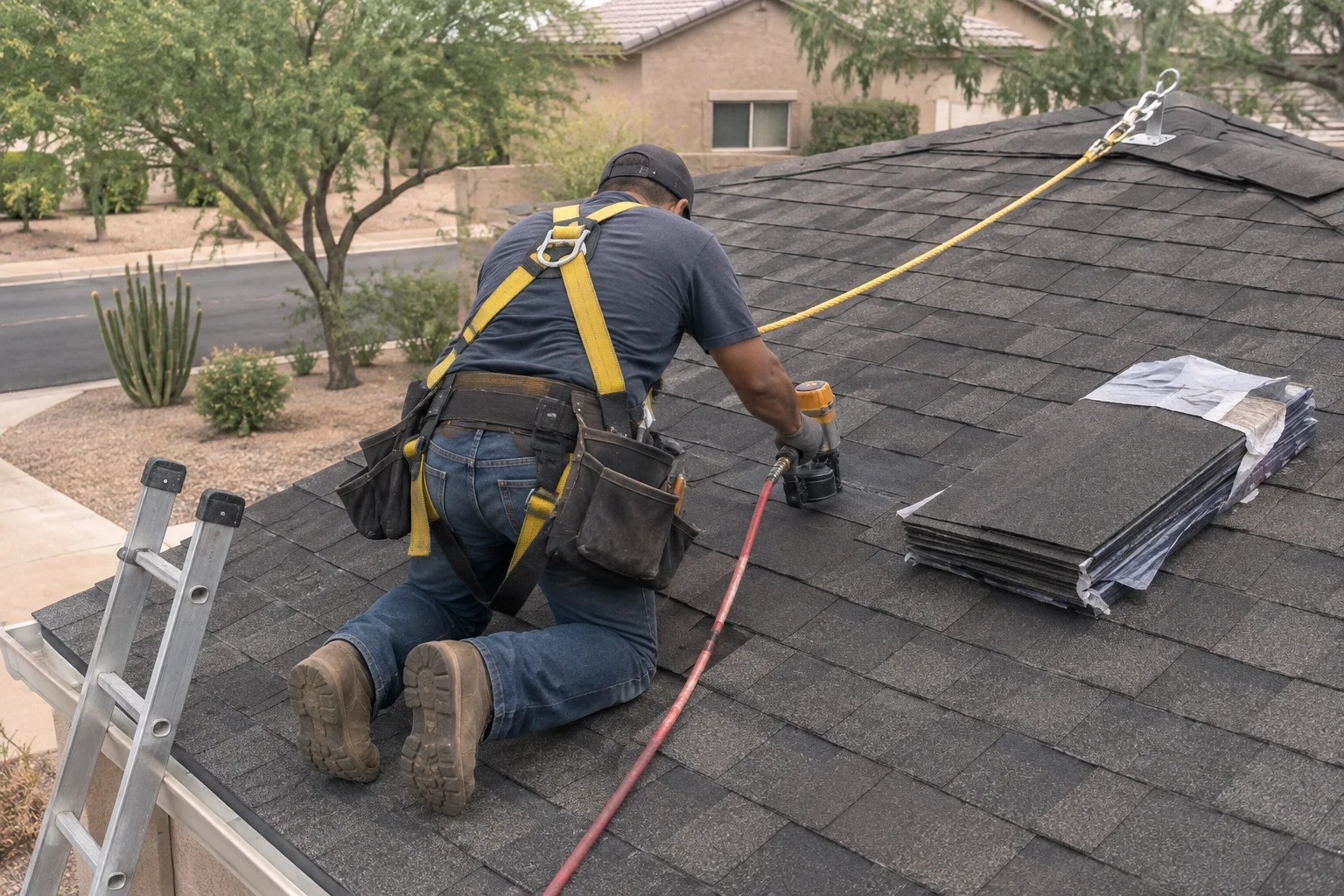
We install and replace asphalt shingle roofs on homes across Paradise Valley and nearby towns. We pull the permit, follow the manufacturer's nailing pattern, and set up your attic ventilation so the shingles can handle the desert heat. You will know each step before it happens.
When Shingles Are the Right Fit for Your Home
Asphalt shingles suit pitched roofs that need a dependable, lower-cost covering. They are lighter than tile, so they work on framing that was never built for that weight. They also come in many colors, and lighter shades reflect more of the summer sun.
Shingles are only as good as the details under them. Code sets the minimum slope, the underlayment, the fastener count and the attic ventilation. Most early shingle failures we see trace back to one of those being skipped. We are an Arizona KB-2 licensed contractor, and we treat those rules as the baseline for every roof we put on your home.
What Your Shingle Roof Includes
- Permit and inspections
- We file the paperwork for a reroof and schedule the required inspections. You will not have to deal with the building department yourself.
- Tear-off to bare sheathing
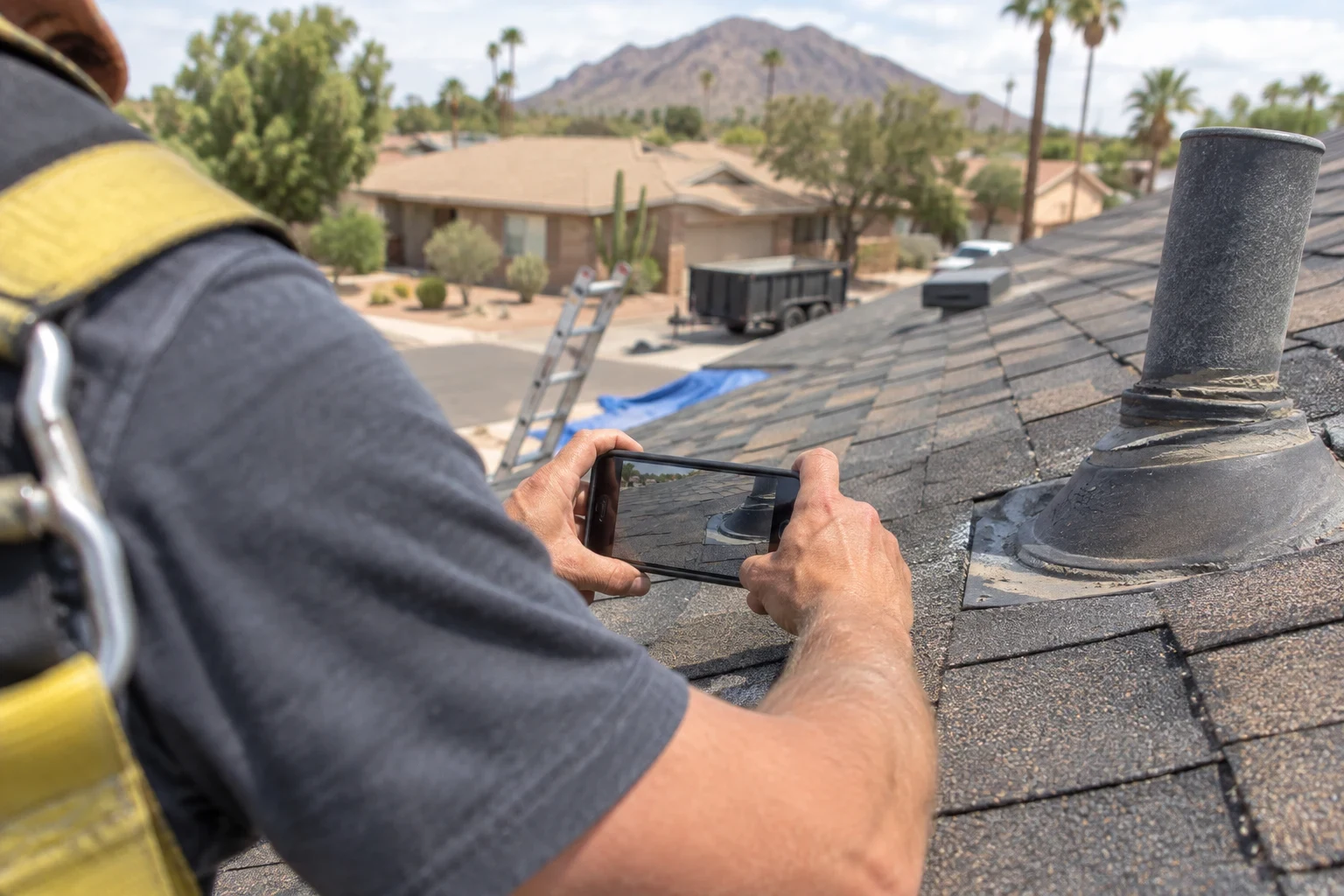
- Every old layer comes off until only the wood sheathing is left. Code caps how many layers a roof may carry, and bare boards let us spot rot or plywood that has started to separate. We send you photos of any weak sections, then swap them out before new material goes on.
- Underlayment matched to your slope
- Lower-pitch sections get the extra underlayment that code calls for. Steeper sections get a full layer that holds up under high attic temperatures.
- Flashing, drip edge and valleys
- New metal goes in at walls, chimneys, vents and roof edges. Old flashing reused under new shingles is a common source of leaks, so we replace it.
- Ventilation sized to code
- We balance intake and exhaust for your attic's square footage. A roof that breathes runs cooler, and the shingles last longer when the attic is not baking them from below.
- Cleanup before we leave
- Tarps go over your plants and pool equipment before the old roof comes off. Debris goes straight into the dumpster, and we roll a nail magnet over the yard and driveway to pick up anything that fell.
Signs Your Shingles Are Wearing Out
Granules in the yard or downspout areas
Those tiny colored grains are the shingle's sun shield. Once they wash off, UV breaks down the asphalt quickly.
Curling, cupping or cracking
Shingle edges that lift or crack usually mean heat has dried them out. A strong monsoon gust can then get under them.
Missing or loose tabs
A shingle that lets go exposes the underlayment, and that layer was never meant to face the sun alone.
Stains on ceilings or in the attic
Water spots often appear well away from the actual leak. On older roofs they tend to point to failing flashing or underlayment rather than one bad shingle.
A hot, stuffy attic
Poor ventilation shortens shingle life and drives up cooling costs. It is often fixed as part of a new roof.
How a Shingle Job Runs
- 1
We look at your roof and talk
We measure the roof, check the slope and attic ventilation, and listen to what you want. If a few repairs make more sense than a new roof, we tell you that and point you to our roof repair work.
- 2
Written estimate and paperwork
You get a line-item estimate that covers the layers, decking allowance, underlayment and vents. Once you approve it, we file with the building department and set a start date.
- 3
Removal and dry-in
On most homes, the old roofing comes off and the deck is covered with fresh underlayment that same first day, so your home is protected overnight. In summer we begin at first light to stay ahead of the afternoon heat.
- 4
Shingles, flashing and vents
We install shingles to the manufacturer's spec, with the right nail count and placement for the high-wind rating. Ridge vents and flashing go in as we go.
- 5
Final inspection and walkthrough
The building inspector signs off on the work. Then we walk through the results with you and leave you the paperwork.
What Shapes the Cost of a Shingle Roof
Every home is priced on its own measurements and conditions. We list each part of the job in writing so you can see where the money goes. If we find bad decking during tear-off, we show you before replacing it.
- Roof size and pitch
- More squares of shingles cost more, and steep roofs need extra safety setup and slower work.
- Layers to remove
- Two old layers mean more labor and more disposal than one.
- Decking condition
- Soft or water-damaged sheathing has to be replaced before new shingles can go down.
- Shingle line and ventilation
- Architectural and impact-rated shingles cost more than basic three-tab. Adding or upgrading attic vents also adds material and labor.
Shingle Roofing Questions
Something not covered here? (480) 485-3889
Do I need a permit to replace my shingles?
A full reroof generally does, and we handle the application for you. That brings a city inspection, which gives you an independent check that the work meets code. It also helps if you sell your home later and a buyer asks about the roof.
Is it okay to layer new shingles on top of the old roof?
Building code caps how many layers a roof may carry, and a second layer hides the decking from view. We nearly always suggest stripping the old roof so we can check and repair what lies below. An extra layer also adds weight and holds more heat against the deck.
How long do shingles last in this heat?
Sun and heat are hard on asphalt, so shingles here usually wear faster than in milder climates. Good attic ventilation, a quality underlayment and a lighter color all help them last longer.
Is there a warranty on your shingle work?
Yes. Our installation comes with a 10-year labor warranty. The shingles also carry their own manufacturer warranty, and we explain how the two work together.
Should I choose shingles or tile?
Shingles cost less upfront and weigh far less. Tile lasts longer but needs framing that can carry it. Our tile roofing page covers that option, and we are glad to compare them for your home.
Ready to Talk About Your Shingle Roof
Tell us about your home and your roof, and we will explain what the job involves, from the permit to the final inspection.