ServicesFoam Roofing
Foam Roofing in Paradise Valley
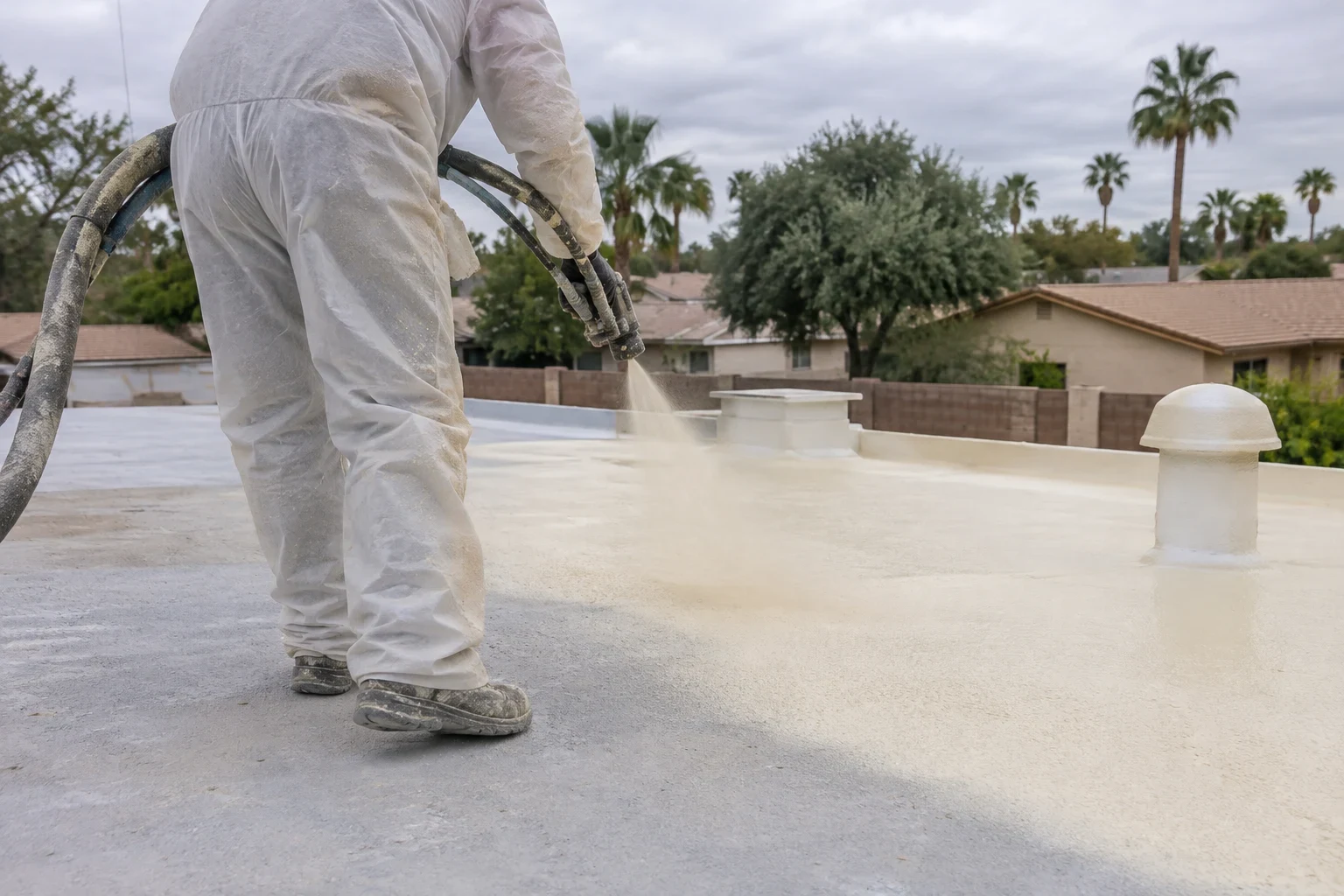
Spray foam gives a flat roof one continuous, insulated surface with no seams to open up. We build it to drain, seal it with a code-approved coating and handle the permit and inspection, so you know exactly what is on your home and why.
What a foam roof is and when it makes sense
Spray polyurethane foam goes on as a liquid and expands into a rigid, closed-cell layer that bonds to the deck below. Because it is sprayed in place, it wraps around vents, pipes and parapet walls without seams or fasteners. That makes it a strong choice for the flat and low-slope roofs found on many Southwest-style homes, where water has a way of finding every joint.
Foam is the right call when your roof has drainage trouble, when you want more insulation over living space, or when an older built-up or foam roof still has a sound deck under it. If foam is not the best fit for your home, we will say so and talk through the other options on our Flat Roofing page.
As an Arizona KB-2 licensed contractor, we treat the paperwork as part of the job. Building codes require sprayed foam to be covered by an approved protective coating, and a reroof generally needs a permit and a final inspection. We explain each step before we start.
What our foam roofing work includes
Surface prep
We remove loose gravel, failed coating and wet or damaged material, then clean the deck so the new foam bonds properly. Foam sprayed over dirt or moisture will not hold.
Slope built into the foam
Foam can be sprayed thicker in some areas to push water toward drains and scuppers. We use that to get rid of low spots that hold water after a monsoon rain.
Detailing at edges and penetrations
Parapet walls, AC stands, plumbing vents and skylight curbs get foam worked up and around them. These are the places older flat roofs usually leak.
Approved protective coating
Bare foam breaks down in sunlight, so we finish with a coating rated for roof use, applied in more than one coat to the needed thickness. Granules can be broadcast into the final coat for added protection where foot traffic is expected.
Permit and inspection
We file the paperwork with the town where it is required, schedule the inspection and walk you through the result when it passes.
Cleanup and a final walk
We collect debris, remove masking and walk the roof with you so you can see the finished surface before we leave.
Signs your foam roof needs attention
Foam showing through the coating
Tan or brown foam that feels dusty means the coating has worn away. Sunlight will keep eating into the exposed foam until it is recoated.
Water that sits for days
Ponding after a rain points to low spots or clogged scuppers. Standing water speeds up coating wear and can find its way into small cracks.
Blisters or soft spots
Raised bubbles or areas that give underfoot often mean moisture got under the foam. These need to be cut out and repaired, not just painted over.
Bird pecks and small punctures
Birds sometimes peck at foam, leaving pockmarks. Left open, those holes let water into the foam layer.
Stains on the ceiling below
A water mark inside your home is often the first sign anyone notices. The leak may sit a few feet from the stain, so we trace it from the roof side.
How a foam roofing job runs
- 1
Look and listen
We start with a conversation about your roof and what you have noticed, then look at the surface, drains and deck. You get a clear answer on whether a recoat, repair or new foam system is the right fit.
- 2
Written scope and paperwork
You receive a written estimate listing the prep, foam thickness and coating. We file with the town where approval is needed and set a work date around the weather, since foam cannot go down on a wet deck or in strong wind.
- 3
Prep and protection
We mask windows, stucco walls, cars and anything near the roof edge. Spray foam can drift, so protecting your home is part of the day, not an afterthought.
- 4
Spray and coat
Foam goes on in passes to build thickness and slope. Once it cures, the coating follows in separate coats so each one bonds to the last.
- 5
Inspection and handoff
After the inspection, we walk the roof with you and explain how to keep the coating in good shape over the years.
What moves the price of a foam roof
Foam roofs are priced by the job, and the main drivers are size, the condition of what is underneath and how much slope needs to be built in. We give you a written, line-item estimate so you can see where the money goes. Your quote comes by phone after we have looked at the roof.
- Roof size and foam thickness
- More square footage means more material, and fixing drainage calls for thicker foam in some areas.
- Tear-off or spray over
- A dry, sound existing roof can sometimes be foamed over. Wet or failed layers have to come off first, which adds labor and disposal.
- Coating type
- Acrylic and silicone coatings differ in cost and in how they handle sun and standing water. We explain the tradeoff for your roof.
- Parapets, penetrations and access
- Lots of vents, AC units and tall parapet walls take more detail work. Tight access to the roof can add time as well.
Foam roofing questions
Something not covered here? (480) 485-3889
How long does a foam roof last?
The foam itself can last for decades when the coating stays intact. The coating is the part that wears, and it needs a fresh coat every several years depending on its type and how much sun it gets. Keeping up with recoats is what keeps a foam roof working.
Can you spray foam over my existing roof?
Sometimes. If the old roof is dry, firmly attached and in decent shape, foam can bond over it. If we find wet or loose material, it has to come off first, and we will show you what we found before changing the plan.
Will overspray get on my house or car?
Foam can drift, which is why we mask nearby walls, windows and vehicles and watch the wind through the day. If conditions are too breezy, we pause rather than risk it.
Do I need a permit for a foam roof?
Usually, yes. Reroofing work generally calls for one, followed by a final inspection. We handle the application and schedule the inspection, so you do not need to deal with the town office yourself.
Is the work covered by a warranty?
Yes. Our foam roofing work is backed by a 10-year labor warranty. We will explain what it covers when we go over your estimate.
Can I walk on a foam roof?
Yes, it is firm enough for normal foot traffic like servicing an AC unit. For areas that see regular traffic, we can add granules to the coating for extra protection.
Ready to talk about your flat roof?
Tell us what you are seeing and we will explain your options, from a recoat to a full foam system. You will know the scope, the inspection steps and the price before any work begins.