ServicesNew Roof Installation
New Roof Installation in Paradise Valley
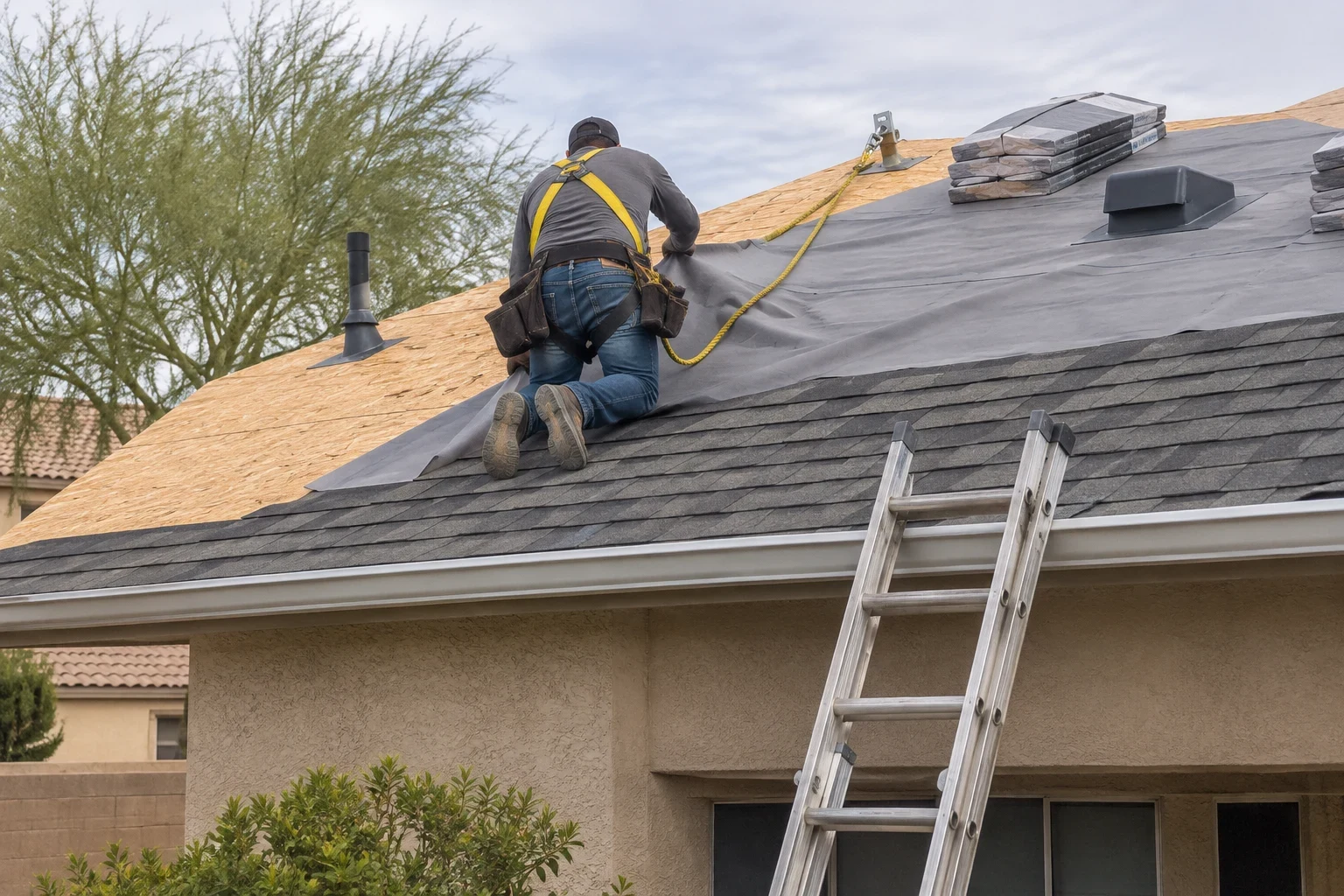
Building a new home, an addition or a casita? We install the roof from bare framing to finished surface, coordinate with your builder and handle the code details the inspector checks. You get a roof built to pass inspection and keep the weather out for years.
A roof built right from the first board
New roof installation is for structures that have never had a roof: a custom home under construction, a room addition, a guest casita, a garage or an enclosed patio that is becoming living space. It is different from roof replacement, where we tear off an old system first. Here we start with framing and sheathing, so every layer is ours and every layer is done to code.
That matters because a new roof is inspected in stages. The inspector wants to see the deck nailing, the underlayment and the flashing before they get covered up. We plan the job around those checkpoints, so nothing has to be pulled back open and your build schedule does not slip while you wait for a re-inspection.
We are an Arizona KB-2 licensed contractor, and we explain each permit and inspection step in plain language before work begins. You will know what is being checked, when, and why.
What a new roof installation includes
Plan and material review
We read the plans with you and your builder, confirm the roof pitch and confirm the material fits it. Tile, shingle and foam each have minimum slope rules, and catching a mismatch on paper is far cheaper than catching it on the roof.
Deck and sheathing check
Before anything goes down, we check that the sheathing is fastened on the required schedule and ready for inspection. Loose or missed nails here are a common reason new roofs fail their first look.
Underlayment rated for desert heat
Roof decks here can run far hotter than the air temperature in summer. We use underlayment rated for high temperatures, especially under tile, where it does most of the waterproofing work.
Flashing, edges and penetrations
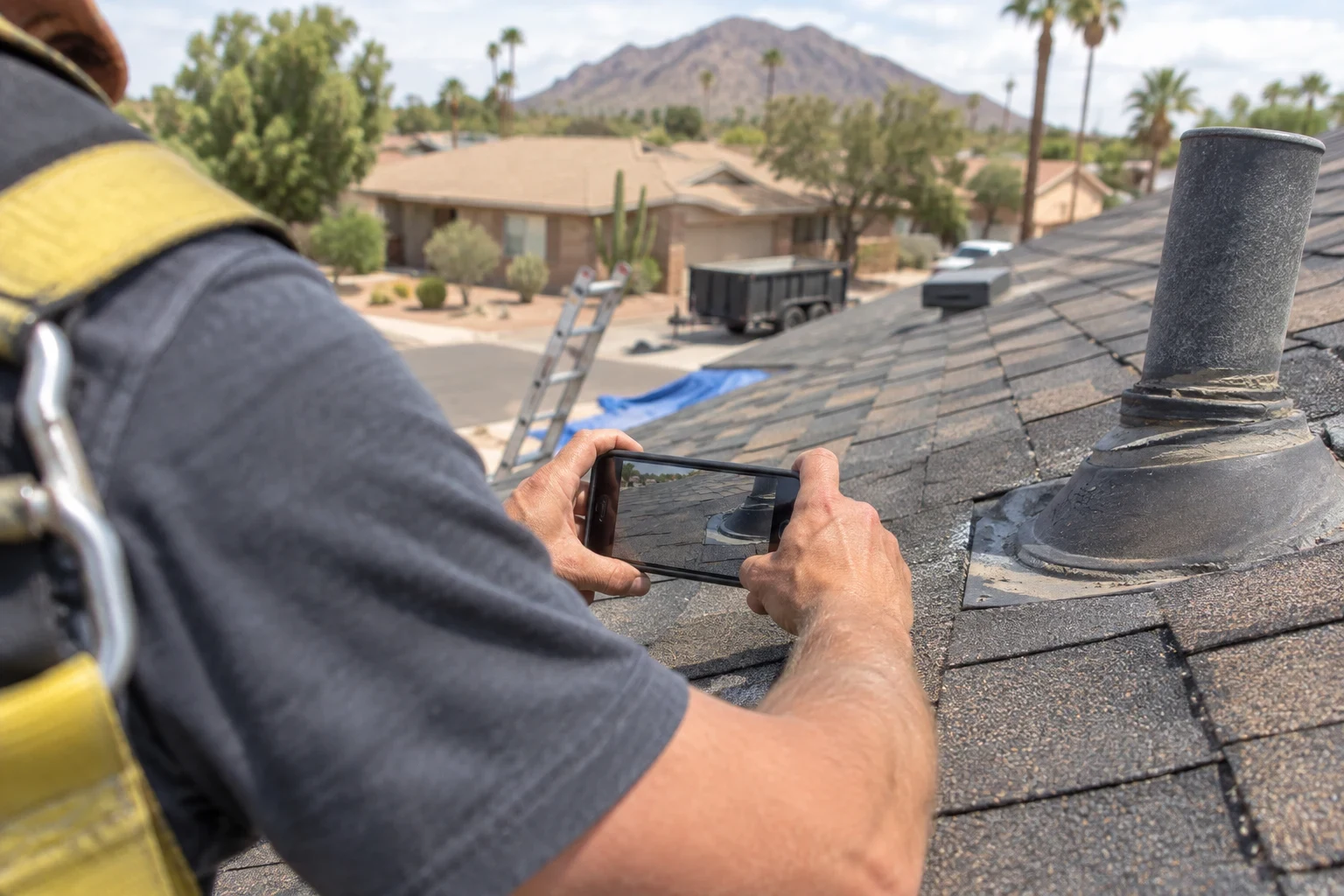
Drip edge, valley metal, wall flashing and every vent or pipe boot get installed and sealed so the inspector can see them clearly. These are the spots where leaks start, so we never rush them.
Ventilation that meets code
We balance intake and exhaust vents for the attic size. Good airflow keeps attic heat down and helps the roofing last as long as it should.
Finished roof and cleanup
We install the finished surface, walk the site for nails and scraps, and leave the area ready for the next trade.
When new roof installation is the right call
- You are building a custom home
- Your builder needs a roofer who can match the framing schedule and pass each roof inspection without holding up the crews behind us.
- You are adding a room or second story
- An addition needs a new roof that ties into the existing one cleanly. The tie-in is where most addition leaks begin, so it needs careful flashing and matching materials.
- A casita or guest house is going up
- Smaller structures still go through plan review and inspections. We treat them with the same care as the main house.
- A patio or carport is becoming living space
- Enclosing a space often means the old cover no longer meets the code for a conditioned room. A properly built new roof fixes that.
- Your existing roof is coming off down to the framing
- If the decking is being replaced too, the job works more like a new installation. Our roof replacement page explains the more common tear-off job.
How the job runs
- 1
A phone call and a site visit
We talk through your project by phone, then visit to see the framing or the plans. You get a written, line-item estimate that shows materials, labor and city fees separately.
- 2
Paperwork and scheduling
We confirm the roofing is covered under the building permit or file what is needed, then set dates around your builder's timeline and the required inspections.
- 3
Deck, underlayment and flashing
Our crew prepares the deck, lays the underlayment and installs flashing. We call for any required in-progress inspection before covering this work.
- 4
Finished roofing installed
Tile, shingles or foam go on according to the manufacturer's instructions and the code. Our crew protects windows, landscaping and finished surfaces nearby.
- 5
Final inspection and walkthrough
We meet the inspector for the final, then walk the roof with you and share photos of the layers now hidden underneath.
What moves the price of a new roof
Every new roof is priced from the plans and the site, so we do not quote numbers until we have seen both. Your written estimate breaks out each cost, and we explain anything that could change it before work starts.
- Roof size and shape
- More square footage costs more, but complexity matters just as much. Hips, valleys, dormers and multiple levels add flashing and labor.
- Material choice
- Tile, shingle and foam differ in material cost, weight and installation time. Tile may also need the framing confirmed for its load.
- Tie-ins to existing roofs
- Additions that meet an existing roof need extra flashing and careful matching, which adds time compared to a standalone structure.
- Access and site conditions
- Steep pitches, tight lot lines or limited room for material delivery can affect labor and equipment needs.
- Fees and inspection count
- City fees and the number of required inspections vary with project scope, and we list them plainly on your estimate.
New roof installation questions
- Do I need a separate permit for the roof on a new home?
- Usually the roofing falls under the main building permit for a new home or addition. Some projects, like new decking over an existing structure, need their own paperwork. We confirm which applies before scheduling so nothing is left uncovered.
- Which roofing material should I choose?
- It depends on your roof pitch, the look you want and your budget. Tile suits the steeper roofs common on desert-style homes, shingles work on moderate slopes, and foam is made for low-slope and flat roofs. Our tile roofing, shingle roofing and foam roofing pages go deeper on each.
- How long does a new roof installation take?
- Most of the time comes from the size of the roof and the inspection schedule, not the installation itself. A casita may take a few days, while a large custom home takes longer. We give you a realistic timeline once we see the plans.
- Will the roof on my addition match my existing roof?
- We work to match the material, color and profile as closely as possible. Older tile and shingle styles can be discontinued, so we show you the closest options before ordering.
- What warranty comes with a new roof?
- Our installation work is covered by a 10-year labor warranty. Roofing materials also carry their own manufacturer warranties, and we walk you through what those cover.
Planning a new home or addition?
Tell us about your project and where you are in the build. We serve Paradise Valley and nearby towns including Scottsdale, Phoenix and Fountain Hills, and we will explain the inspection steps on the call.