ServicesRoof Replacement
Roof Replacement in Paradise Valley
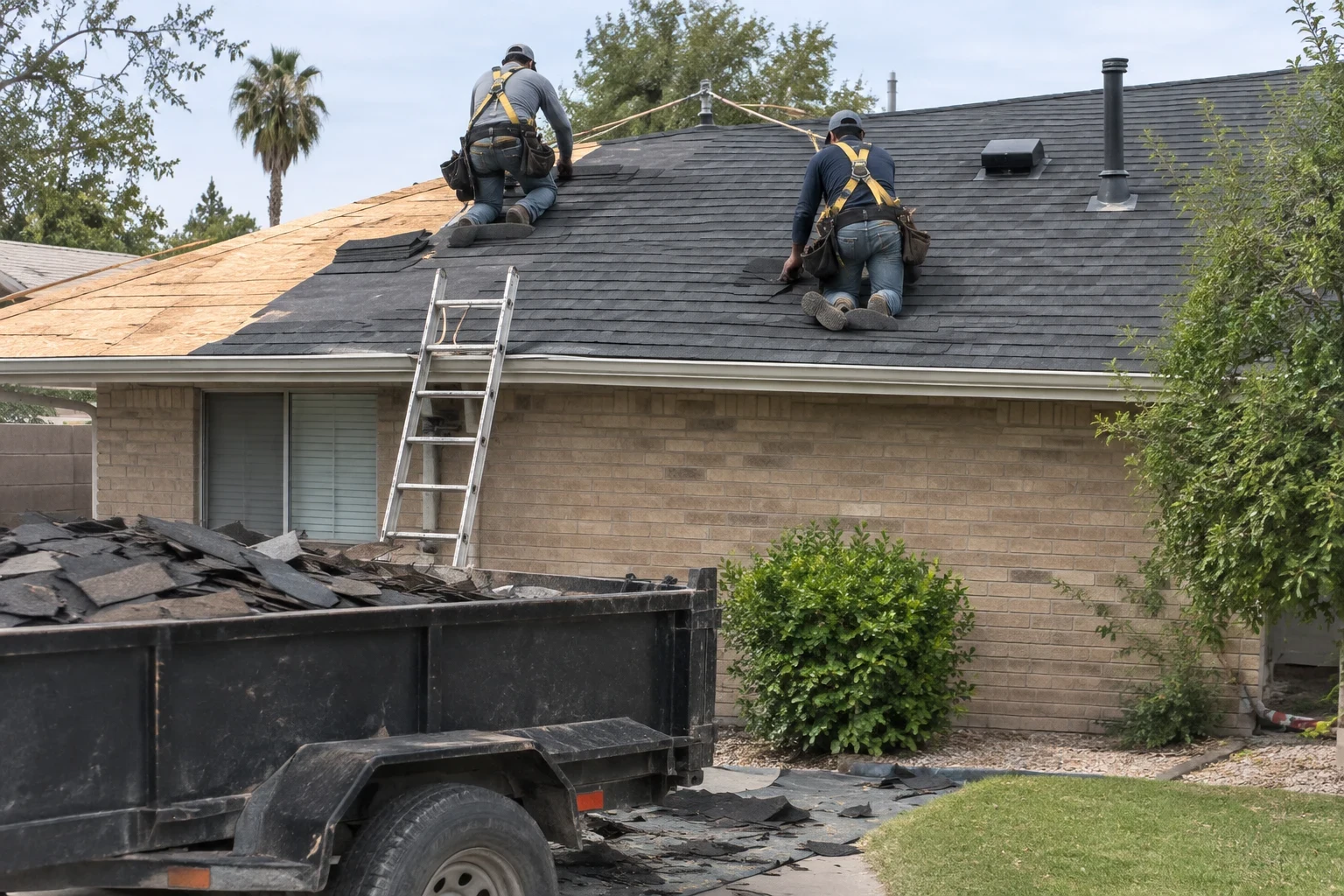
If repairs keep failing, a full replacement ends the cycle. We strip your roof to the bare sheathing, fix what we find and rebuild it to today's code. We handle the permit, meet the town inspector and clean up after ourselves, so the job is done right once.
When a Full Replacement Is the Right Call
A roof replacement means removing the old covering, fixing what is underneath and installing a new system: decking, underlayment, flashing, ventilation and the finished surface. It is a bigger job than a repair, and we only recommend it when the roof has reached the point where repairs would keep coming back.
Sun and heat are hard on roofs here. On tile roofs, the tiles often outlast the underlayment beneath them, and that hidden layer is what actually keeps water out. On shingle and flat roofs, years of UV exposure dry out the materials until they crack and let go. If your roof is there, we will tell you plainly, and if a repair will still buy you good years, we will tell you that too.
Every replacement we do is built to the code in effect today, not the code from when your home went up, and the town signs off on it before we call it finished. That matters when you sell, when you file an insurance claim and every time a monsoon storm tests the roof.
What Your Roof Replacement Includes
Town paperwork and inspections
We handle the paperwork the town requires, book each required inspection and are on site when the inspector arrives. You never have to chase a form or wait on hold.
Removal down to bare sheathing
Every layer of old roofing comes off so the true condition of the wood underneath is visible. We skip overlays, since they bury problems and load extra weight onto your framing.
Deck repair and fastening
Soft, delaminated or rotted sheathing is replaced, and the deck is fastened to the pattern code requires. We photograph damaged areas and show you before we cover them.
New underlayment and flashing
Fresh underlayment rated for the roof type, new flashing at walls, chimneys and penetrations, and new drip edge. On tile roofs we can often reuse sound tiles over the new underlayment.
Ventilation brought up to code
We check intake and exhaust venting and correct it where it falls short. Proper airflow lowers attic heat and helps the new materials last.
Cleanup and final walkthrough
We cover landscaping and protect walls while we work, run magnets over the yard for stray nails and walk the property with you at the end. The job closes once the final inspection passes.
Signs Your Roof Needs Replacing
- Water showing up in several rooms
- A single drip can usually be repaired. When stains spread across different ceilings, or a patched spot starts leaking again, the roof is worn out as a whole.
- Brittle or exposed underlayment
- On a tile roof, slipped or broken tiles can reveal underlayment that has gone dry and torn. Once that layer fails widely, resetting a few tiles will not stop water.
- Cracked, curling or bare shingles
- Shingles that have lost their granules, curled at the edges or split in the sun are near the end of their life.
- Ponding and blistering on a flat roof
- Water that sits for days after a storm, or blisters and splits in the surface, means the membrane or coating has failed and the slope may need correcting.
- A sagging or spongy deck
- If the roof line dips or feels soft underfoot, the sheathing below is likely damaged. That calls for a full replacement, not a surface fix.
How a Replacement Job Runs
- 1
Talk it over, then a look
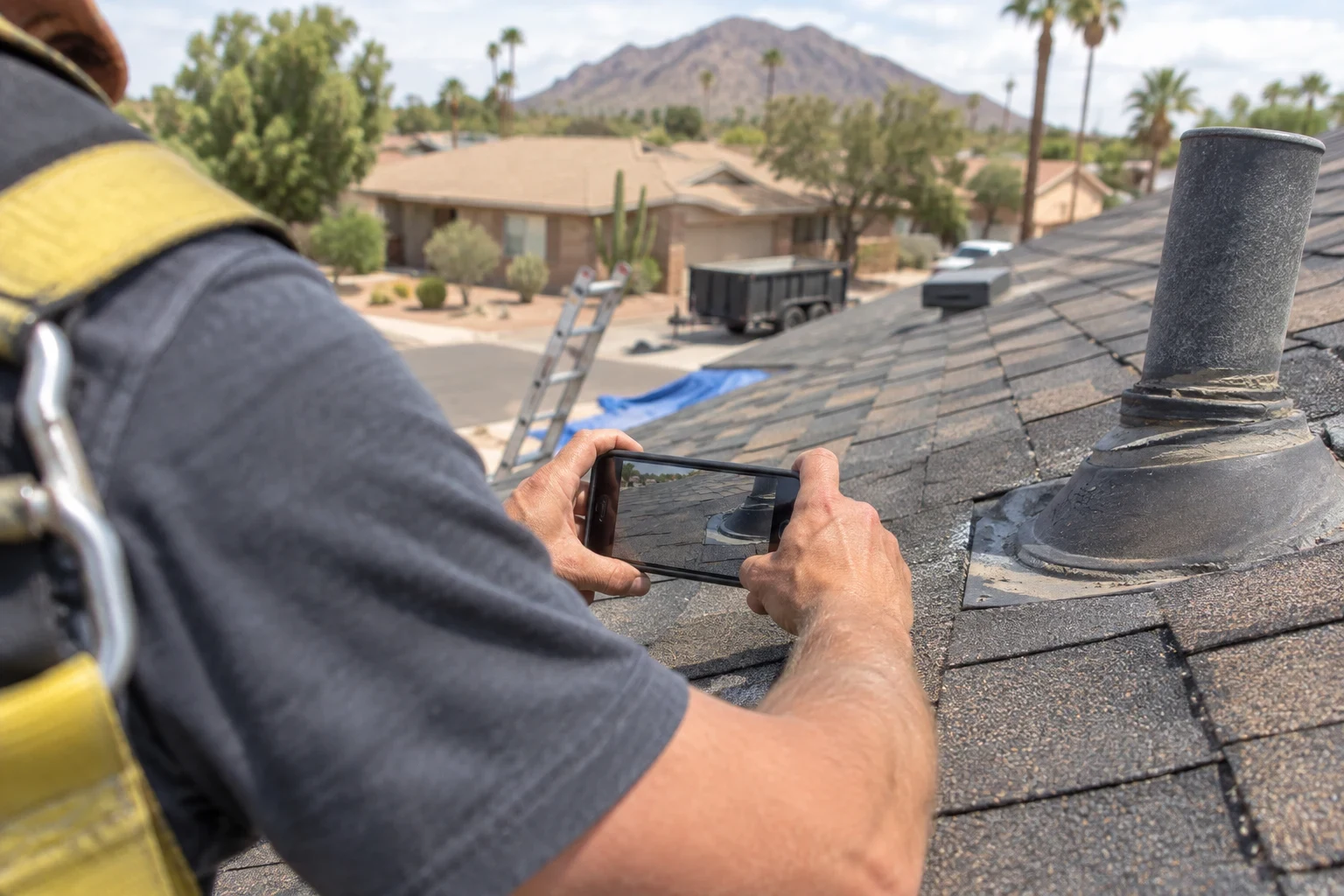
It starts with a phone conversation about your roof, its age and what you are noticing. Then we come out, get up on the roof and take photos so you can see exactly what we see.
- 2
Written estimate and town approval
You receive a line-item estimate covering materials, scope and how any deck repair found after tear-off is priced. Once you give us the go-ahead on the phone, we apply to the town for the permit.
- 3
Tear-off and rebuild
Our crew protects your home, removes the old roof, repairs the deck and installs the new system. We dry the roof in before leaving each day, so your home is not left open overnight.
- 4
Final inspection and walkthrough
We book the town's final inspection, correct anything the inspector flags and walk the finished roof with you. Our 10-year labor warranty backs the workmanship.
What Moves the Cost of a Roof Replacement
We price each roof from its actual measurements and what we find on it, so we won't give you a number until we've seen it. Your written estimate lists each part of the job separately, and we tell you before work starts how any hidden deck damage will be handled. These are the factors that change the total most.
- How big and how steep
- A larger roof takes more material and more hours from the crew. Steeper slopes call for added fall protection and slow the pace of the work.
- The roofing system you pick
- Tile, shingle, foam and flat roof systems each have their own material costs and install times. On some tile jobs, reusing sound tiles trims the material portion of the bill.
- What the deck looks like underneath
- Any rotted or weak sheathing must be replaced before new layers go on. No one can know how much until the old roof is off, so we photograph it and go over the cost with you before we cover it.
- Bringing older roofs up to code
- Older roofs often need ventilation, flashing and fastening upgraded to meet current code, which adds work. Chimneys, skylights and a lot of pipes or vents also add flashing time.
- Access and old layers
- Hard-to-reach roofs, tall walls or several old layers stacked on top all add labor and haul-away costs.
Roof Replacement Questions
- Does a roof replacement need a permit?
- Yes, and we handle it for you. The permit means a town inspector comes out to confirm the work meets code. Leaving that step out can cause trouble with an insurance claim or hold up the sale of your home down the road.
- Who are we hiring to do the work?
- Roofing Paradise Valley is an Arizona KB-2 licensed contractor. Ask about it when you call, and we're happy to explain what that means for your job.
- Can you put a new roof over my old one?
- We don't. Tearing off the old roof lets us find and fix rotted decking and worn-out flashing that an overlay would hide, and it keeps extra weight off your framing.
- How long will the job take, and can I stay home?
- Many replacements take a few days, depending on size, material and what we uncover under the old roof. You're welcome to stay home throughout. Tear-off is noisy, and we'll ask you to park cars away from the work area.
- What warranty comes with a replacement?
- Our workmanship is backed by a 10-year labor warranty. Any coverage from the maker of the roofing material is separate, and we'll go over what applies to the product you choose.
- Should I replace or just repair?
- When the problem is confined to one area and everything around it is still in good shape, roof repair usually gives you more for your money, and we'll tell you that honestly. Replacement is the better choice when leaks keep coming back, the underlayment has broken down across the roof or the deck itself is damaged.
Let's Plan Your Replacement
Give us a call and describe what your roof is doing. We will explain the code work involved, what the town will check and what your replacement would include, so you know each next step.