How Old Can a Roof Be Before Insurance Calls It Too Old in Paradise Valley?
Your insurer's letter about roof age is less mysterious once you know what they check and what you can show them.
How old may a roof be before insurance claims it's too old?
There is no single cutoff. Each insurer sets its own rule, and many start asking hard questions somewhere between 10 and 20 years, depending on the material. Shingle roofs usually get flagged sooner than tile or foam. What matters most is the roof's documented age and its visible condition. Questions about your roof? (480) 485-3889
Is there a fixed age when insurance stops covering a roof?
No law sets one number for every policy. Each company writes its own underwriting guidelines, and those guidelines change from year to year. One insurer may renew a 20-year-old tile roof without a second look, while another sends a non-renewal notice for a shingle roof half that age.
The more common change is not losing coverage but getting less of it. Some policies switch the roof from replacement cost to actual cash value, or to a payment schedule, once it passes a certain age. That means a claim would pay you for a worn roof, not a new one. Your declarations page and any roof endorsement spell this out, so it is worth reading both before renewal time.
If the wording is unclear, ask your agent two direct questions: at what age does my roof coverage change, and what would you need to see to keep it the same?
How does an insurer decide how old your roof is?
Insurers rarely take a guess on faith. They look for a date they can rely on, and if they cannot find one, they often assume the roof is as old as the house. For a home built decades ago that has had a reroof since, that assumption can work against you.
This is where a properly permitted job pays off. When a roof replacement goes through the town permit and passes its final inspection, there is a dated public record that the work was done and done to code. That record is often the cleanest proof of age you can hand an underwriter.
- The building permit and final inspection record for the last reroof
- The contractor's invoice or contract showing the completion date
- The inspection report from when you bought your home
- Aerial or satellite images the insurer pulls on its own
- A photo-based review by the insurer's own inspector at renewal
Why tile and foam roofs get judged differently here
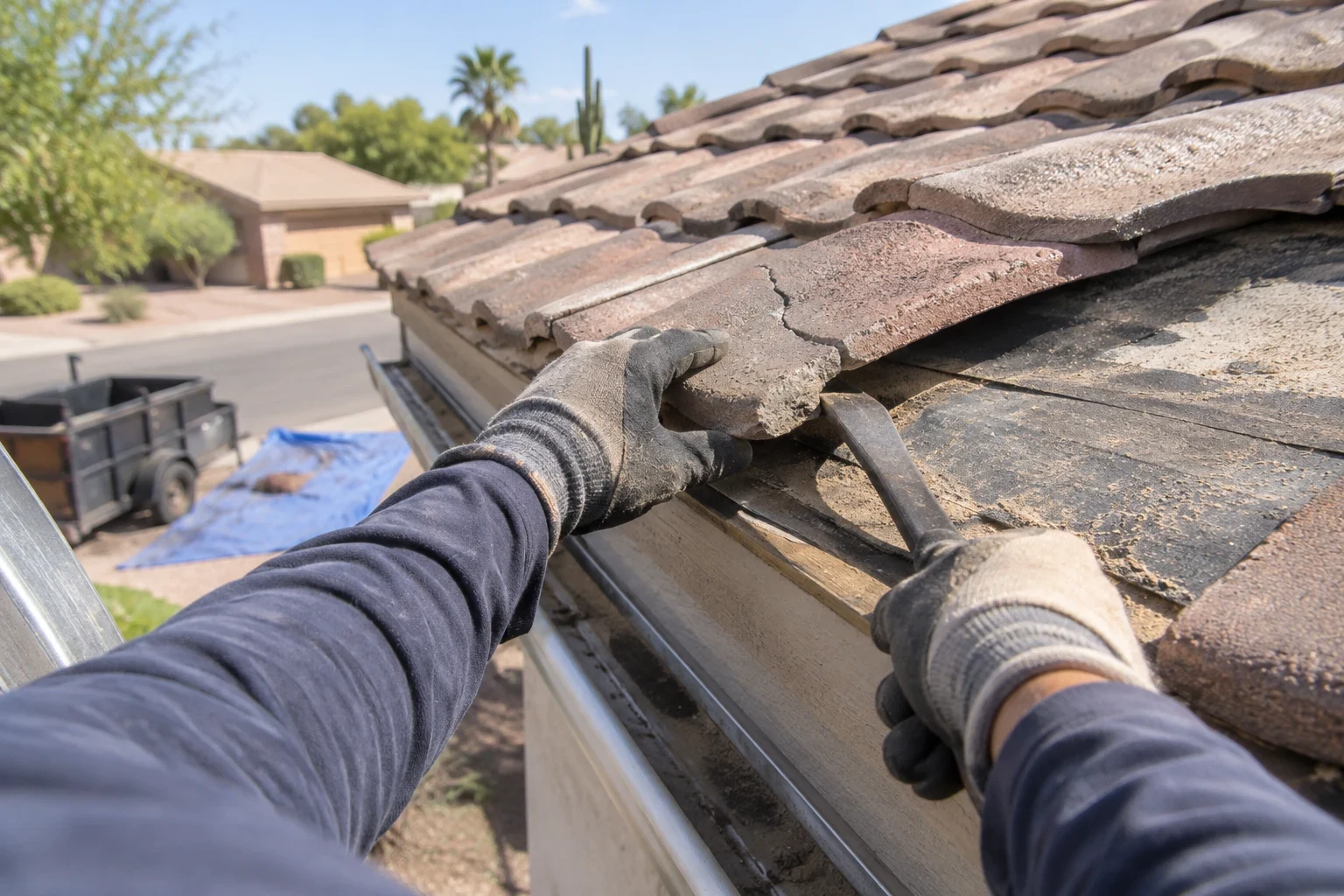
Concrete and clay tile can last a very long time, and a lot of homes around Paradise Valley carry it. The weak point is the underlayment beneath the tile. Years of desert sun and heat dry it out until it cracks, and once that happens the tiles above are only shedding part of the water. An insurer looking at the surface may see a roof that seems fine, while an older home's underlayment is already near the end of its life.
Foam roofs on flat sections are a different case. The foam itself holds up well when its coating is kept up, but the coating wears under UV exposure and needs recoating on a regular cycle. If the coating has worn through and the foam is exposed or blistered, an underwriter is likely to treat the roof as older than its install date suggests.
Shingle roofs tend to show age most plainly. Granule loss, curled edges and brittle tabs show up in photos, which is one reason insurers often flag them first. Monsoon season adds wind and sudden heavy rain on top of the summer heat, so a roof that limps through spring can reveal its age quickly.
Should you repair or replace if your insurer flags the roof?
Start by reading exactly what the insurer asked for. Sometimes the notice lists specific items, such as cracked or slipped tiles, lifted flashing or worn coating, and a documented repair satisfies it. Other times it calls for a roof that meets a certain age, and repairs will not change that date.
When we look at a flagged roof, we take photos of what we find and give you an honest answer on whether roof repair will hold or whether roof replacement makes more sense. If the underlayment under your tile is still sound, resetting and replacing broken tiles may be all you need. If it is brittle across the roof, patching on top of it only buys a short time.
If replacement is the right call, we pull the permit and schedule the inspections the town requires. You end up with the new roof and the paperwork an insurer wants to see, with a clear install date on record. We cannot promise what any insurer will decide, but we can make sure the work and the records are solid.
- Get the insurer's request in writing before any work starts
- Ask whether a repair invoice will satisfy it or only a new roof will
- Keep photos, the invoice and permit records together in one file
- Send the documentation to your agent once the work is finished
More questions about roof age and insurance
Something not covered here? (480) 485-3889
Does a roof repair reset the age of my roof?
Usually not. Insurers generally date a roof from its last full replacement, so a repair improves condition but leaves the age on record unchanged.
Can my insurer drop me just because of my roof's age?
Many insurers can choose not to renew a policy based on roof age or condition, though the rules and notice periods depend on your policy and state requirements. Your agent can tell you what applies to your coverage.
Will a new roof lower my premium?
It may, and some insurers give credit for newer roofs or certain materials. Ask your agent before the work starts so you know what documentation they will want afterward.
Do I need a permit to replace my roof in Paradise Valley?
A full reroof generally requires a permit from the town, along with inspections during and after the job. We handle the permit for the replacements we do, which also gives you a dated record for your insurer.
Got a letter about your roof's age?
Give us a call and tell us what your insurer asked for. We will talk through your roof's material and history, come out to see it, and give you a straight repair-or-replace answer along with how the permit side would work.